How Tariffs Are Raising Your Grocery Prices in 2026
Tariff grocery prices are climbing fast. See which foods cost more, why tariffs raise prices for consumers, and how to save on your grocery bill.
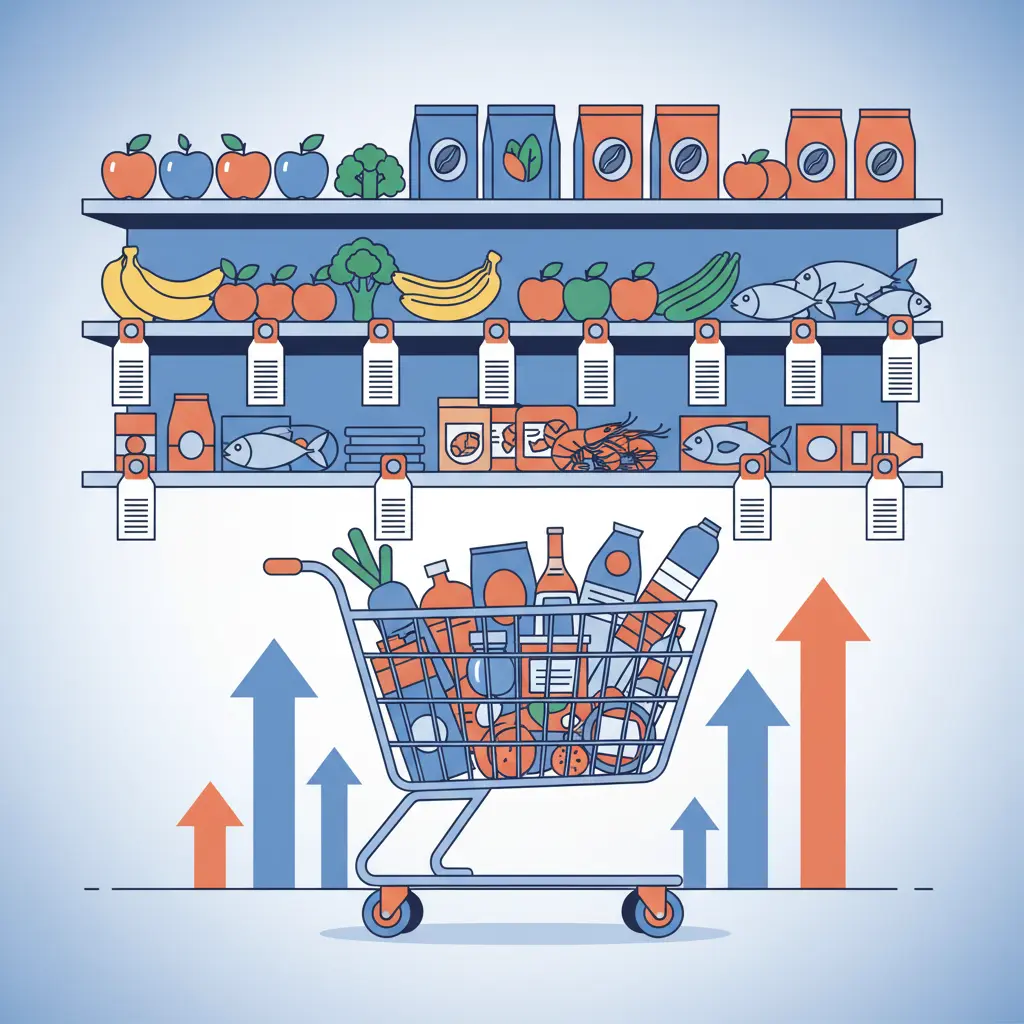
A year ago, on April 2, 2025, the White House announced sweeping “Liberation Day” tariffs that reshaped global trade. Twelve months later, you are paying the price — literally — every time you walk into a grocery store. According to the Council on Foreign Relations, American consumers absorbed roughly 76% to 94% of tariff costs throughout 2025, and food prices have climbed steadily since.
This is not abstract economics. It is showing up on your receipt. Let’s break down exactly how tariff grocery prices are affecting your wallet, which items are hit hardest, and what you can do about it.
How Much Have Tariff Grocery Prices Actually Increased?
The short answer: more than you might expect for a policy that was supposed to target foreign governments, not American shoppers.
The Yale Budget Lab and the Tax Foundation have both tracked the real-world impact. Here are the key numbers:
- Overall grocery prices: up 2.8% directly attributable to 2025 tariffs
- Fresh produce: up 4%, driven by tariffs on imports from Mexico and Central America
- Sugar and confectionery: up 5.7% year-over-year, with an additional 6.7% increase projected through 2026
- Coffee: prices have surged as tariffs compound existing supply chain disruptions from climate-related shortfalls in Brazil and Vietnam
These percentages may sound small in isolation, but they compound on top of the inflation Americans already experienced from 2021 to 2024. For a family spending $1,000 a month on groceries, a 2.8% across-the-board increase means roughly $336 more per year — and that figure is higher if your cart leans toward fresh produce and imported goods.
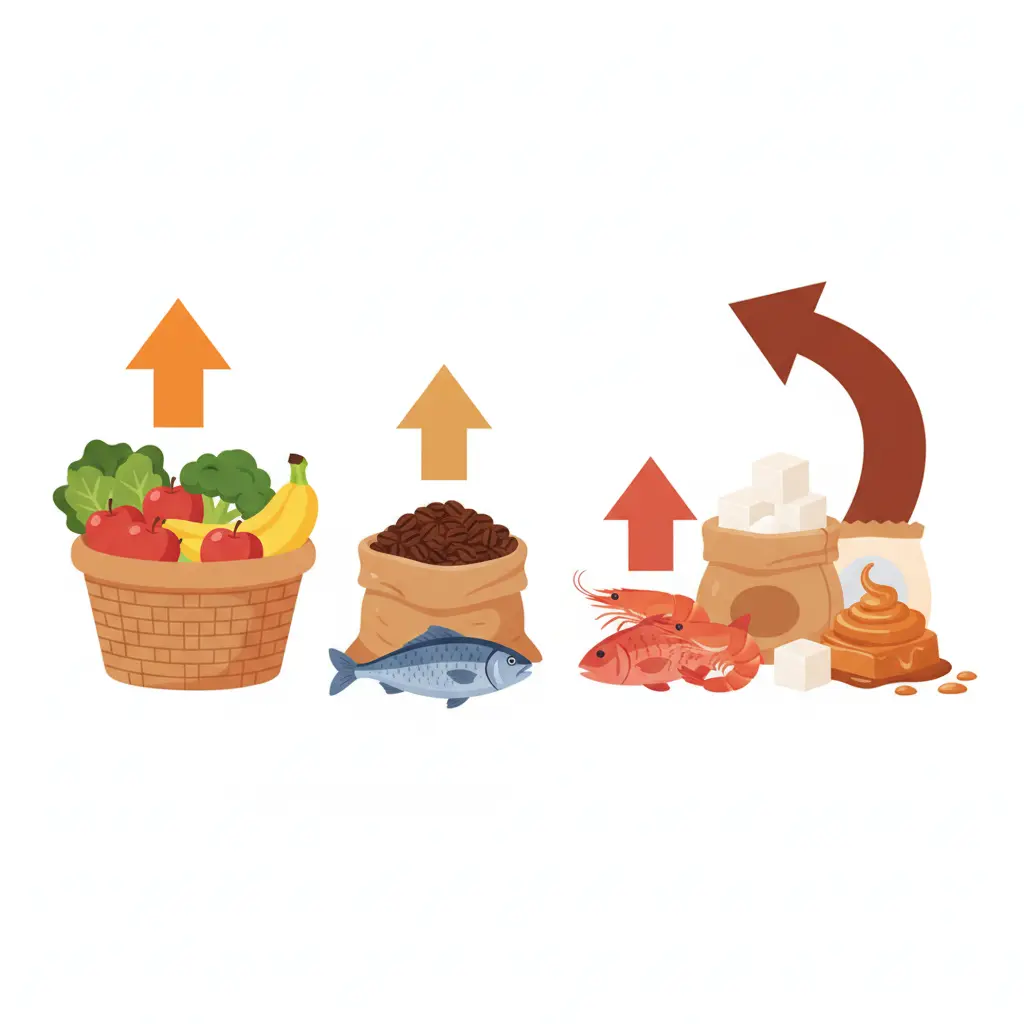
Which Products Are Most Affected by Tariffs?
Not every item on the shelf is impacted equally. The tariff burden depends on where your food comes from, what trade deals are in place, and whether specific exemptions apply.
Fresh Fruits and Vegetables
The U.S. imports a significant share of its fresh produce, especially during winter months. Mexico alone supplies roughly half of America’s fresh vegetable imports and a large share of fruits like avocados, berries, and tomatoes. Tariffs on Mexican goods have pushed fresh produce prices up 4% on average, with some seasonal items spiking even higher.
Coffee and Chocolate
Both are almost entirely imported. Coffee faces compounding pressures: tariffs on top of climate-driven supply shortages have pushed retail prices to multi-year highs. Chocolate is similarly squeezed, as cocoa imports face both tariff costs and a global cocoa shortage.
Seafood
The U.S. imports about 80% of its seafood. Tariffs on shrimp, salmon, and canned tuna from key suppliers — including China, Canada, and Southeast Asian nations — have led to noticeable shelf-price increases. Frozen shrimp, one of America’s most popular seafood items, is particularly affected.
Sugar and Processed Foods
Sugar and confectionery products saw a 5.7% annual price increase through early 2026. Because sugar is an ingredient in thousands of processed foods — from cereals to sauces — this ripples across the entire center of the store.
What Got Exempted
The administration did grant tariff exemptions on some items, including certain cuts of beef, select fruits, and some spices. However, the Tax Foundation found that even after exemptions, more than 50% of imported food products still face tariffs. Out of roughly $222 billion in annual U.S. food imports, about $164 billion worth (74% before exemptions) was originally targeted.
| Category | Price Impact | Key Driver |
|---|---|---|
| Fresh produce | +4% | Mexico/Central America tariffs |
| Sugar & sweets | +5.7% | Import duties + global shortage |
| Coffee | Significant increase | Tariffs + climate supply issues |
| Seafood | Moderate increase | 80% import dependency |
| Overall groceries | +2.8% | Broad tariff exposure |
Why Do Tariffs Increase Prices for Consumers?
If you have heard that tariffs are “paid by foreign countries,” the data tells a very different story. Here is how the cost actually flows to your grocery cart.
The Pass-Through Mechanism
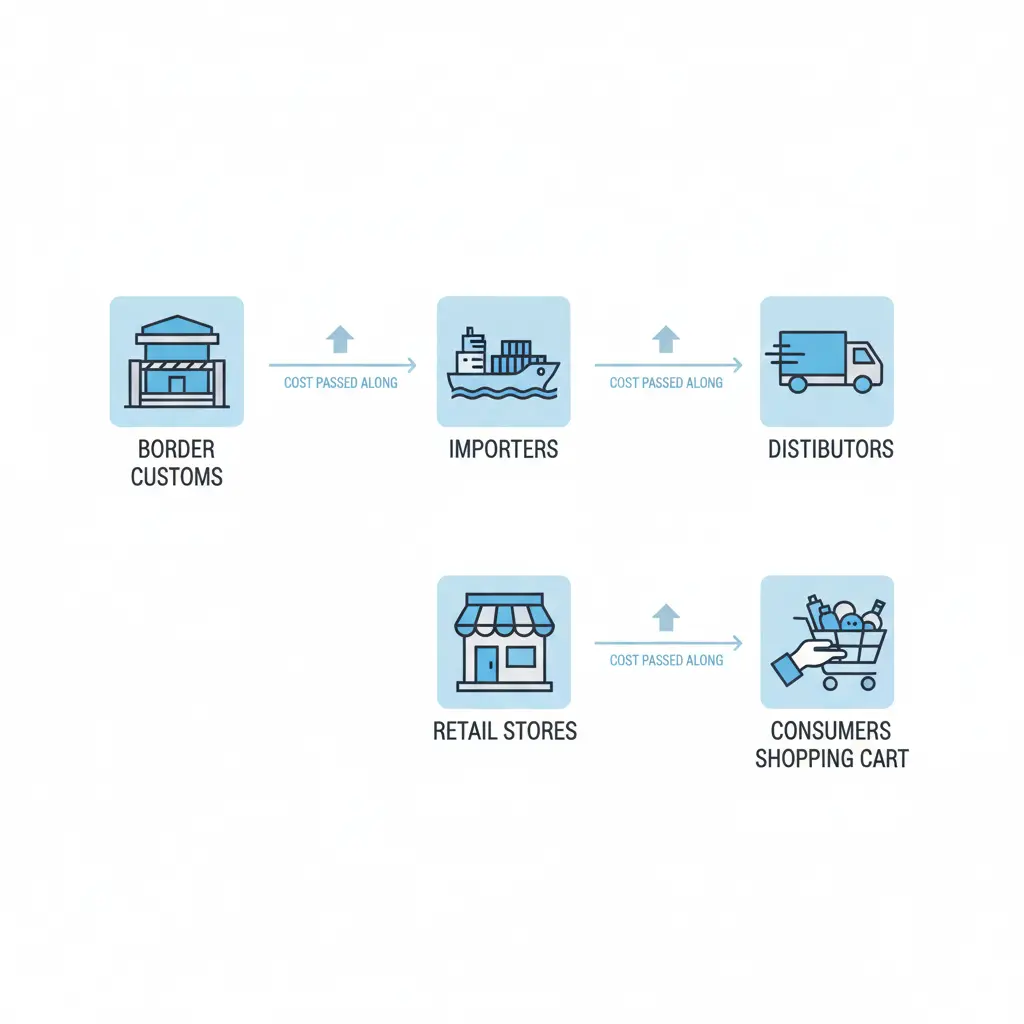
When the U.S. government imposes a tariff — say, 20% on imported olive oil — it is the American importer who writes the check to U.S. Customs. That importer then passes the cost to the distributor, who passes it to the retailer, who passes it to you. At each step, margins get added. A 20% tariff at the border can easily become a 25-30% price increase at the register.
The CFR analysis confirmed this: American consumers bore 94% of tariff costs by August 2025. Even as some costs were shared with foreign exporters later in the year, consumers still shouldered roughly 76% by year-end.
Why Retailers Cannot Simply Absorb the Cost
Major retailers like Walmart and Target have publicly stated they cannot fully absorb tariff costs without raising prices. Grocery retail operates on razor-thin margins — typically 1-3%. When input costs rise by 2-5%, there is simply no margin cushion to absorb the hit. Walmart’s CFO explicitly warned investors that tariff-driven price increases were “inevitable” across multiple product categories.
The Ripple Effect on Domestic Producers
Even domestically produced food gets more expensive. When imported alternatives cost more due to tariffs, demand shifts to domestic products, pushing those prices up too. American farmers also face higher costs for imported fertilizers, equipment parts, and packaging materials — costs that get passed along to consumers.
What the Tariff Situation Looks Like One Year Later
Liberation Day set the initial effective tariff rate at 22.5% — the highest level in nearly a century. After various exemptions, negotiations, and partial rollbacks, the effective rate has settled to approximately 12% as of early 2026. That is still dramatically higher than the pre-2025 average of around 2-3%.
Trade Deal Progress
The administration promised 90 deals in 90 days. One year later, only 17 agreements have been finalized, according to CFR tracking. Major trading partners — including the EU, Japan, and South Korea — have made investment pledges (Japan: $550 billion, South Korea: $350 billion), but most remain unfulfilled commitments rather than signed trade deals.
Agricultural Export Damage
The tariffs have also hurt American farmers. U.S. agricultural exports to China dropped 54% in the first half of 2025, falling from a projected $17 billion to $9 billion annually. This matters for grocery prices too — when farmers lose export markets, the domestic supply glut can temporarily lower some prices, but farm income drops, leading to reduced planting and higher prices in subsequent seasons.
Is Walmart Raising Prices Because of Tariffs?
Yes. Walmart, Costco, and other major retailers have confirmed that tariffs are a direct driver of price increases across their stores. Walmart specifically flagged categories like electronics, home goods, and grocery imports as areas where prices have risen. The company has tried to mitigate the impact through supplier negotiations, but executives have been clear that consumers will see higher prices.
What You Can Do to Save on Groceries
You cannot control trade policy, but you can control your shopping strategy. Here are practical steps to offset tariff-driven price increases.
Buy Seasonal and Local
Fresh produce prices are highest when imports fill the gap during off-season months. Shopping at farmers’ markets and buying in-season produce from domestic growers can avoid the tariff premium entirely. In-season strawberries from California cost significantly less than off-season imports from Mexico.
Shift to Less-Affected Proteins
While imported seafood prices have jumped, domestically produced chicken and pork remain relatively insulated from tariff impacts. Eggs, despite their own price volatility, are almost entirely domestic. Consider adjusting your protein mix toward these options.
Stock Up Strategically
For non-perishable imports like coffee, olive oil, and canned goods, buying in bulk during sales can lock in prices before the next round of increases. Coffee prices in particular are expected to continue climbing through 2026.
Use Store Brands
Private-label products typically have shorter, more domestic supply chains. Retailers have more pricing flexibility with their own brands and often absorb more of the tariff cost to keep store-brand prices competitive against national brands.
Compare Across Retailers
Price disparities between retailers have widened as each store handles tariff costs differently. Warehouse clubs like Costco and discount grocers like Aldi tend to pass through smaller increases than traditional supermarkets.
Frequently Asked Questions
Will Groceries Get More Expensive Because of Tariffs?
Yes. Current data shows grocery prices have risen 2.8% on average due to tariffs, with specific categories like fresh produce (+4%) and sugar products (+5.7%) seeing larger increases. Analysts expect further price pressure through 2026 as remaining tariffs stay in effect and supply chains adjust. The Yale Budget Lab projects cumulative food price increases of 3-5% from tariff policies by the end of 2026.
Has Inflation Gone Up Since Trump’s Tariffs?
Tariffs have been a measurable contributor to inflation, though they are one factor among several. The tariff-attributable portion of food inflation is approximately 2.8 percentage points. Combined with housing costs, energy prices, and wage growth, overall inflation has remained above the Federal Reserve’s 2% target. The Fed has cited trade policy uncertainty as a factor in its interest rate decisions.
What Products Are Most Affected by Tariffs?
The hardest-hit grocery categories are fresh produce (especially from Mexico), coffee, chocolate, seafood, and sugar-based products. Non-food items like clothing, electronics, and furniture have also seen significant tariff-driven price increases. The Tax Foundation found that over 50% of all imported food products remain subject to tariffs even after exemptions.
Do Tariffs Increase Prices for Consumers?
The evidence is unambiguous: yes. The Council on Foreign Relations found that American consumers absorbed 76-94% of tariff costs in 2025. Tariffs function as a tax on imports, and that tax is overwhelmingly passed through to retail prices. Grocery retailers operating on 1-3% margins have limited ability to absorb the additional costs.
How Long Will Tariff-Driven Price Increases Last?
As long as the tariffs remain in effect, their price impact persists. Even if tariffs were removed tomorrow, it would take 6-12 months for supply chains and pricing to fully adjust. Given the current political environment, most trade analysts expect the bulk of existing tariffs to remain through at least 2027.
The Bottom Line
One year after Liberation Day, tariff grocery prices are a concrete reality for American families. With overall food costs up 2.8%, fresh produce up 4%, and sugar products climbing nearly 6%, the average household is spending hundreds of dollars more annually at the checkout. The data is clear: consumers — not foreign governments — are bearing the lion’s share of tariff costs. While you cannot change trade policy, you can adapt your shopping habits to minimize the impact on your budget.
This article is for informational purposes only and does not constitute investment advice. Always do your own research before making financial decisions.